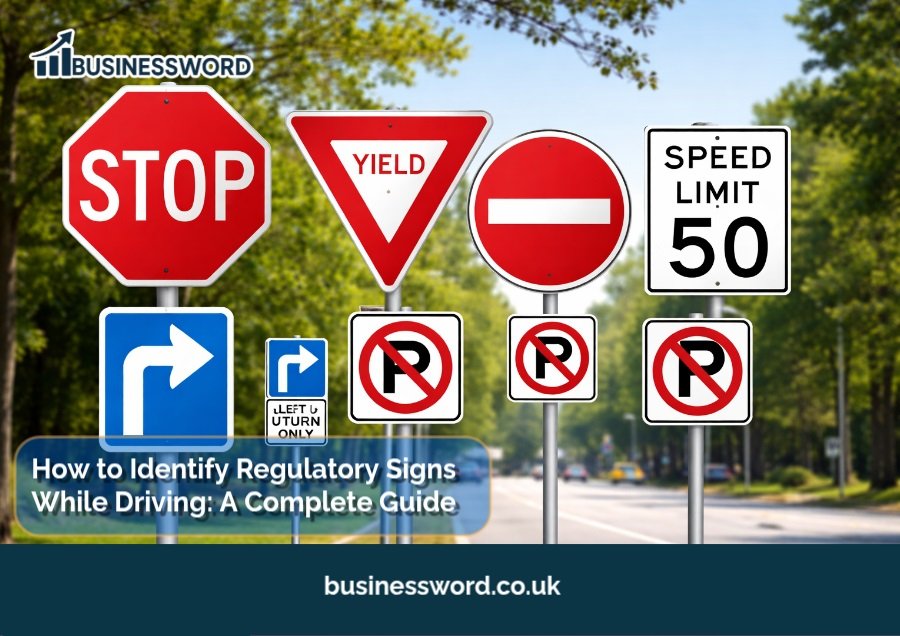
Regulatory signs play a vital role in road safety by making clear the dos and don’ts for the users of the road. For example, signs indicate in an unequivocal manner the actions of the drivers. A person ignoring those signs may cause an accident or receive a fine.
You are going to learn all the aspects of signs in this article. Definition, types, colors, shapes, and importance are all included in the discussion. Examples and FAQs are also provided for better understanding.
What Are Regulatory Signs?
Regulatory signs are traffic signs that rule and law enforcement. They are binding by law. Always the drivers have to obey these signs. The signs are responsible for the control of the traffic and they are also the reason for the order on the road. They lower confusion and accidents. These signs are universal; there may be slight variations in their designs in different countries but their main purpose is the same.
The Significance of Regulatory Signs
Regulatory signs are indispensable in managing traffic. They are a shield for the rights of the ones that drive, the ones that ride, and the ones that walk.
Regulatory Signs and Their Key Benefits:
- They ensure the discipline of road users.
- They contribute to the decline of road accidents.
- They offer unambiguous directing to drivers.
- They assist the police in executing the law.
- They result in the improvement of road safety.
The absence of signs would lead to a turmoil-like situation on the roads. The number of traffic accidents would grow rapidly.
Common Colors and Shapes of Regulatory Signs
Regulatory signs have a set of colors and shapes that are the same everywhere. Their standardization gives an advantage to the drivers since they are able to acknowledge them very fast.
Colors That Are Used in Regulatory Signs:
- Red: Means prohibition or stopping.
- White: Indicates rules or regulations.
- Black: For symbols or words.
- Blue: Sometimes designates actions that are obligatory.
Shapes Of Regulatory Signs:
- Circular signs: Represent rules or prohibitions.
- Octagonal signs: Exclusively for stop signs.
- Rectangular signs: Convey regulatory information.
These shapes enable the drivers to respond immediately.
Types of Regulatory Signs
Regulatory signs are classified into several groups. Every group has its own function.
1. Stop Signs
Stop signs are the most notable among regulatory signs. They order cars to halt totally. The driver should stop at the line. Check the road and then go. Running a stop sign is a risk. It frequently causes very bad crashes.
2. Yield Signs
Yield signs command the cars to decrease their speed. They should give preference to the other road users. These signs help in the movement of the traffic. They also minimize the number of unproductive stops. Yield signs are prevalent at intersections.
3. Speed Limit Signs
Speed limit signs indicate the highest or the lowest speeds permitted. They guarantee smooth and safe driving. Speed limits are not the same for all types of roads. Cities have lower limits while highways have greater limits. Compliance with speed limits is a life-saving act.
4. No Entry Signs
No entry signs prohibit the access to specific roads. They stop all vehicles from entering restricted zones. Traffic management is one of the functions of these signs, and they are often seen in one-way streets.
5. No Parking and No Stopping Signs
These signs are regulatory and they manage the parking on the side of the road. They contribute to keeping the roads clear and safe. The no parking signs give allowance for temporary stops, while the no stopping signs do not allow any halt at all. Fines may be imposed for violations.
6. Mandatory Direction Signs
Mandatory signs are the ones that indicate to the drivers the direction they should go in. Additionally, they represent the necessary actions.
The common signs are:
- Turn left only
- Turn right only
- Straight ahead only
Drivers have to comply with these instructions to the letter.
7. Weight and Height Limit Signs
These signs warn that heavy or tall vehicles are not allowed in the area designated by the sign. Besides, the signs serve the purpose of keeping the bridges and tunnels intact. The failure to observe these signs can result in both destruction and legal consequences.
Regulatory Signs vs Warning Signs
A lot of individuals mistake warning signs for regulatory signs. However, there is a very clear distinction between them.
Regulatory Signs:
- Regulate Laws
- Are to be followed
- Typically red, white, or black
Warning Signs:
- Inform drivers about dangers
- Are normative
- Typically, yellow
Knowing the difference is a requirement for safe driving.
Regulatory Signs for Pedestrians
These signs are not only meant for the drivers. The pedestrian also gets the benefit of these signs.
Some of the signs are as follows:
- Pedestrian crossing prohibited
- Pedestrian crossing allowed only
- Do not walk signal
These signs are mainly for safety of pedestrians. They help in reducing the road accidents to a large extent.
Role of Regulatory Signs in Road Safety Education
Knowledge of regulatory signs is a must for drivers. They are taught in driving schools. Besides, questions on regulatory signs are part of license tests. The drivers must be able to spot them at once. Public awareness campaigns also facilitate comprehension. This contributes to the total road safety.
International Standards for Regulatory Signs
The majority of countries stick to the international norm. These norms are determined by the traffic control authorities of each country. The pictures used in the signs are easy to understand. The use of texts is very limited. This makes it very easy for drivers from other countries to understand the signs. The uniformity of road signs across the world is such that it is a major factor that saves lives.
Penalties for Ignoring Regulatory Signs
Noncompliance with regulatory signs is a crime by law. The penalties are different from one country to another.
The following are the most common penalties:
- Fines for traffic violations
- Points taken off driving license
- Confiscation of vehicle
- Legal prosecution
The law enforcement is strict, and thus, there is guaranteed compliance with the regulations.
Tips to Remember Regulatory Signs Easily
These suggestions are not to miss:
- Concentrate on the colors and shapes.
- Know the frequent symbols.
- Test yourself with mock tests.
- Keep your eyes on the signs as you drive.
Recognition is gradually getting better through regular practice.
FAQs About Regulatory Signs
What is the main purpose of regulatory signs?
The primary function of regulatory is to enforce the traffic laws. They give directions to the drivers and at the same time, they help to keep the roads safe.
Are regulatory signs legally enforceable?
Of course, regulatory signs are legally enforceable. Drivers are required to follow them round-the-clock.
What color are most regulatory signs?
The majority of regulatory signs are in the color’s red, white, and black. These colors are the indicators of rules and restrictions.
What happens if I ignore a regulatory sign?
If you ignore a regulatory sign, you may have to pay fines. It may also cause accidents or involve legal penalties.
Are regulatory signs the same in every country?
Regulatory signs are pretty much the same all over the world. Only the design will be slightly different but the meaning of the sign will remain the same.
How can drivers learn regulatory signs easily?
Drivers can learn by referring to driving manuals. Road observation and practice tests are also great ways to learn.
Conclusion
Regulatory signs make up the fundamental part of road safety. They communicate instructions that are clear and legally binding. They assist in keeping order and reducing the likelihood of accidents. Knowledge of signs is a must for every road user. They are to be obeyed by motorists, walkers, and bikers alike. By honoring signs, the safety of roads gets an enhancement. Compliance is a life-saving act and it also lessens the share of traffic problems.